Zero case study
Turning a fasting timer into the most popular fasting app
As founding designer, I turned a countdown timer into a full product. Fasting zones, my biggest bet, became the top driver of Pro upgrades.


At a glance
About the company Four people when I joined, including the CEO. Raised an $8M Series A from Greycroft in 2020.
What my work did
- driver of Pro upgrades: fasting zones
- #1
- designers, from founding designer to the team I grew
- 1 → 5
Zero by the numbers
- people fasting with Zero every night by 2020
- 800,000
- App Store rating, from 445,000 ratings
- 4.8★
In this project
A timer with nothing to come back for
I had worked with Mike Maser at FitStar, which Fitbit acquired. When he took over Zero as CEO in 2018, he brought me in as one of the first three people besides him: an engineer, a product lead, and me.
The app was a countdown, with no accounts, profiles, or subscription. Intermittent fasting was exploding and organic growth was strong, but retention was poor. Once the novelty wore off, there was no reason to open it.
Make the waiting feel like progress
Fasting is boring. You are not doing anything. The app’s job was to make not doing anything feel purposeful.
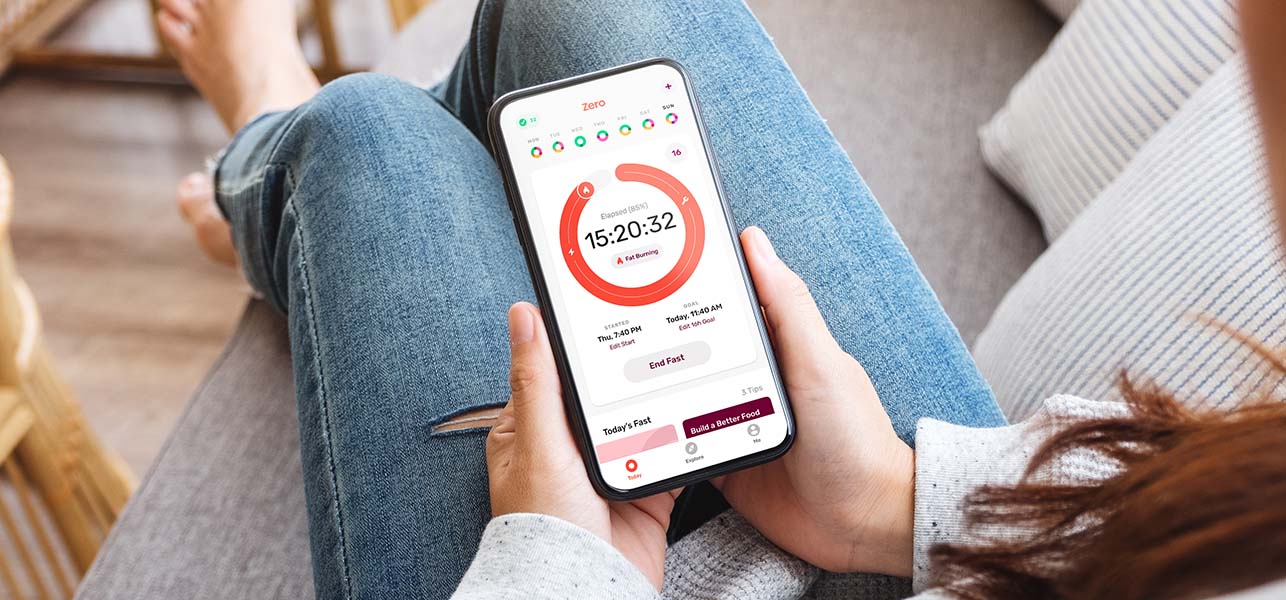
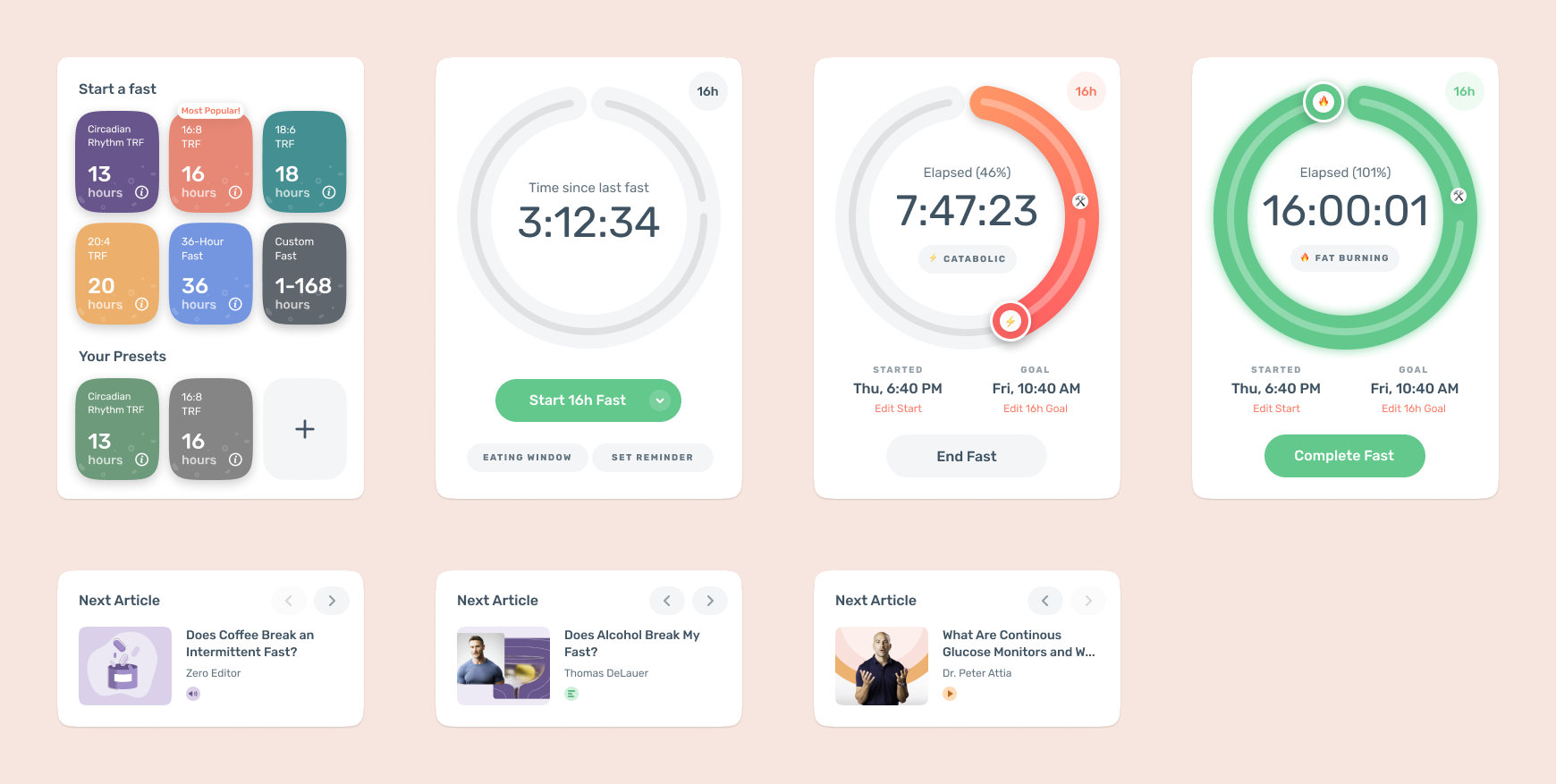
The timer was the product, so it had to change first. I redesigned it as a circular, visual display that felt like something was happening: elapsed time, what remains, and how many people are fasting right now, so a solitary habit feels shared. Popular fasts, from a 13-hour Circadian Rhythm to 20:4, made starting a single tap.


Fasting zones: the body’s phases inside the timer
A competitor marked milestones with small dots on its timer. But fasting phases do not start and stop cleanly. They overlap, and they depend on the person and the length of the fast.
I designed zones into the timer itself, showing what happens in the body at each stage, from digestion through fat burning to ketosis. As the timer moved, you moved through the zones and understood why you were still going. The countdown became a story about your body.
Anabolic0–4h
Digesting your last meal. Blood sugar rises.
Catabolic4–16h
Glycogen stores start to run down.
Fat burning16–24h
Your body shifts to burning stored fat.
Ketosis24h+
Ketone levels rise. Where longer fasts go next.
A number counting down.
The original app showed how long was left, and nothing about what was happening. People tracked for a few weeks, then stopped opening it.
Building the product around the timer
We then built accounts, onboarding, subscriptions, content, history, and social features, plus Apple Watch and widgets. I built the design system and grew the design team to five.
The accounts retrofit was rough. Thousands of existing users had to create an account to keep their history across devices. We explained why, but we lost some people. A necessary system change had interrupted an established habit.


Results
Zones became the biggest driver of Pro upgrades, by a wide margin. The product held up at scale. By 2020, 800,000 people fasted with Zero every night. Zero is rated 4.8 from 445,000 App Store ratings.
What I’d do differently
I would draw the line between free and paid on day one. We made the free app a little too good. You cannot move free features behind a paywall without a revolt, so we had to invent new features worth paying for.
Now I design the free and paid experiences together from the first version, so the paid product has room to grow.

